There’s a moment every homeowner reaches where you realize the weekend patch jobs and room-by-room updates aren’t cutting it anymore. Maybe it’s the third time this year your furnace acted up, or the morning you finally admitted your kitchen layout makes you miserable. For homeowners across the Treasure Valley — in older neighborhoods in Boise’s North End, established communities in Meridian, and ranch homes in Star and Eagle — the question eventually becomes clear: is it time for a whole-house renovation?
A whole-house renovation is a big decision and a significant investment. But it’s also the most transformative thing you can do to a home you love in a location you don’t want to leave. Here are five signs that your Idaho home is telling you it’s time.
1. Your Home’s Core Systems Are Outdated or Failing
This is the most important sign, and it’s the one that turns a “maybe someday” renovation into an urgent priority. Your home’s core systems — electrical, plumbing, and HVAC — have finite lifespans, and when they start failing, the problems compound quickly.
Electrical: If your Idaho home was built before the 1990s, your electrical system may not be equipped to handle modern demands. Older homes in Boise’s established neighborhoods often have 100-amp or even 60-amp electrical panels that were designed for a different era — before home offices with multiple monitors, EV chargers in the garage, modern kitchen appliances, and whole-house air conditioning were standard. Signs of an overtaxed electrical system include frequently tripping breakers, dimming lights when appliances run, warm outlets or switch plates, and an inability to run multiple appliances simultaneously. Beyond inconvenience, outdated wiring is a genuine fire safety concern.
Plumbing: Homes built before the 1980s in the Treasure Valley may still have galvanized steel supply lines, which corrode from the inside and restrict water flow over time. If your water pressure has gradually decreased, if you see rusty water when you first turn on a faucet, or if you’re experiencing pinhole leaks, the supply lines are likely deteriorating. Older drain lines — especially cast iron — also develop problems after 50 to 60 years. Replacing plumbing piecemeal as failures occur costs more in the long run than replacing it all during a renovation when walls are already open.
HVAC: Idaho’s climate demands a reliable heating and cooling system. If your furnace or heat pump is more than 15 to 20 years old, it’s operating well below modern efficiency standards and approaching the end of its reliable service life. Older homes may also have undersized or poorly designed ductwork that creates hot and cold spots throughout the house. A whole-house renovation gives you the opportunity to design a modern HVAC system from scratch — properly sized, efficiently ducted, and zoned for comfort in every room.
When two or all three of these systems need replacement, a whole-house renovation becomes the most cost-effective approach because opening the walls once to address everything is far cheaper than opening them three separate times.
2. Your Floor Plan Doesn’t Work for How You Live
Homes built in the 1970s, 80s, and even 90s were designed around a different lifestyle. Formal living rooms and dining rooms that nobody uses. Closed-off kitchens separated from family gathering spaces. Bedrooms clustered in a hallway with one shared bathroom. Primary suites that feel more like an afterthought than a retreat.
If you find yourself saying things like “I wish the kitchen was open to the family room” or “we need another bathroom” or “this house has plenty of square footage but none of it flows right,” your floor plan is working against you. And unlike a cosmetic update, floor plan problems can’t be fixed with new paint and countertops.
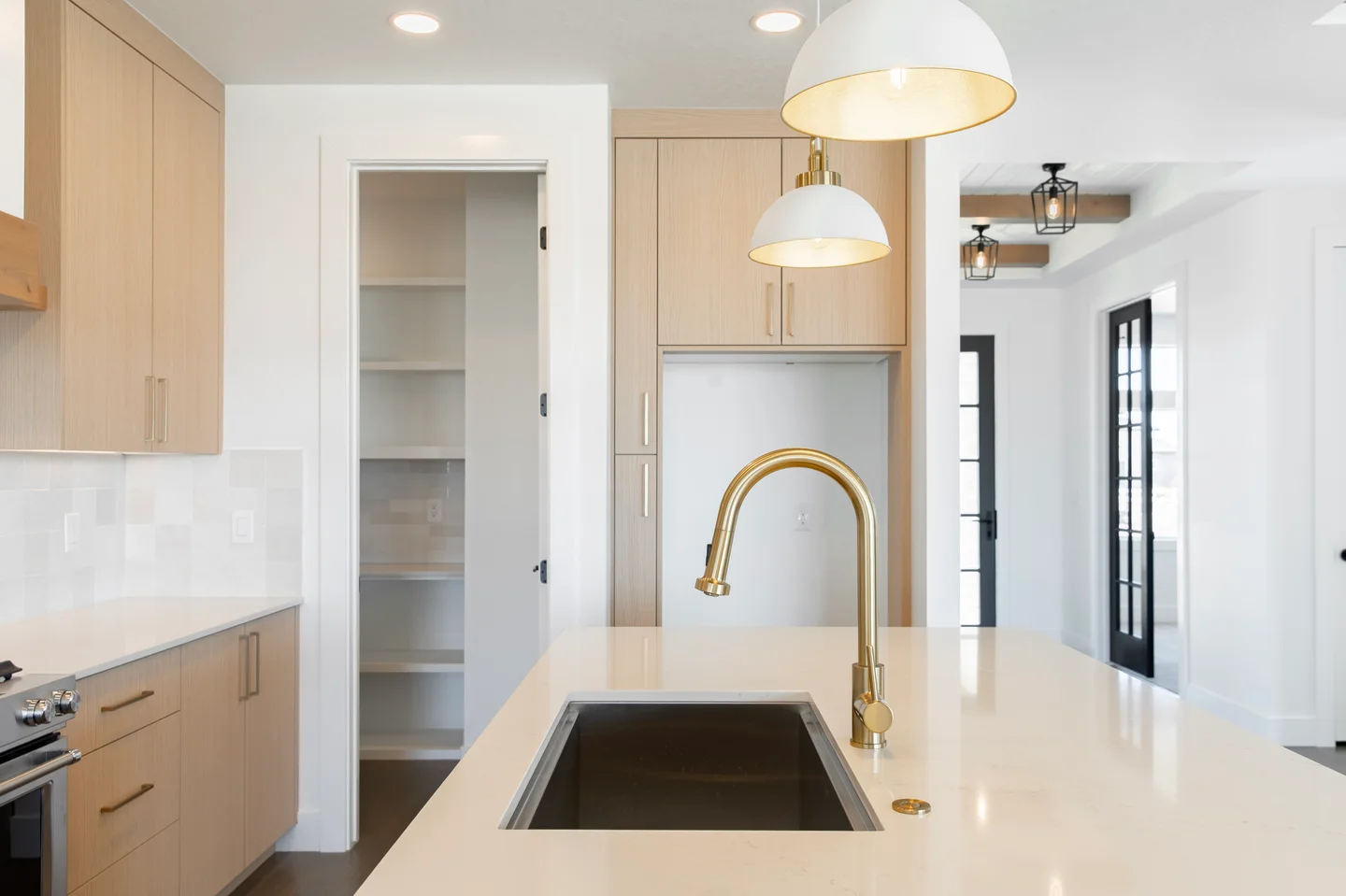
A whole-house renovation can fundamentally reshape how your home functions. Walls come down to create open, connected living spaces. Kitchens move or expand to become the hub of the home. Bathrooms are added where they’re actually needed. Awkward hallways and wasted square footage get reimagined as functional space. The result is a home that works for your life today — not for the lifestyle of the family who built it decades ago.
This is especially relevant for Treasure Valley homeowners who bought homes during Boise’s growth boom and stretched their budget for the location. You may have compromised on the house itself because the neighborhood, the school district, or the lot was exactly right. A renovation lets you keep everything you love about where you live while transforming the house itself.
3. Your Energy Bills Keep Climbing
Idaho Power and Intermountain Gas bills that creep higher each year aren’t just a budget annoyance — they’re a symptom of a home that’s losing energy faster than your systems can replace it. In the Treasure Valley’s climate, where we routinely see summer highs above 100°F and winter lows well below freezing, a poorly insulated home works its HVAC system overtime, and you pay for every watt and therm.
Older Idaho homes often have insufficient insulation — sometimes R-11 in the walls and R-19 in the attic, compared to modern standards of R-21 and R-38 or higher. Single-pane or early double-pane windows leak conditioned air constantly. Air gaps around older windows, doors, and penetrations let outside air infiltrate. And older HVAC equipment operates at 60% to 80% efficiency compared to modern systems that achieve 95% or higher.
The math is straightforward. A home that costs $400 per month to heat and cool with old systems and poor insulation might cost $200 per month after a renovation upgrades the building envelope and mechanical systems. Over 15 to 20 years of homeownership, that’s $36,000 to $48,000 in energy savings — a meaningful offset to your renovation investment.
During a whole-house renovation, we can upgrade insulation throughout (including blown-in wall insulation that doesn’t require removing siding), install high-performance windows, seal the building envelope properly, and install a modern high-efficiency HVAC system. The comfort improvement is immediate and dramatic — consistent temperatures in every room, no drafts, and a noticeably quieter interior.
4. Cosmetic Fixes Aren’t Enough Anymore
There’s a tipping point where cosmetic renovations — new countertops here, fresh paint there, updated lighting fixtures — start feeling like putting lipstick on a pig. You’ve updated the surface, but underneath, the home still has the same problems. The bathroom tile looks new, but the subfloor beneath it is soft. The kitchen cabinets were refaced, but the layout is still cramped. The living room got new flooring, but the room proportions are still awkward.
Cosmetic updates make sense when the bones of the home are good and you’re simply refreshing the aesthetics. But when you find yourself planning a fourth or fifth round of cosmetic updates to rooms that were “updated” just a few years ago, it’s a signal that the underlying issues need attention. Each individual cosmetic fix costs $5,000 to $30,000, and after several rounds, you’ve spent a significant amount without fundamentally improving the home.
A whole-house renovation addresses everything at once — structural issues, system upgrades, layout changes, and finishes — so every dollar goes toward a comprehensive transformation rather than incremental patches. Many homeowners we work with in the Treasure Valley tell us they wish they’d committed to a full renovation years earlier instead of spending money on a series of smaller projects that didn’t solve the real problems.
Consider this: if you add up what you’ve spent on individual room updates over the past ten years, you might be surprised how close that total comes to what a whole-house renovation would have cost — with dramatically better results.
5. You Love Your Neighborhood but Not Your House
This is the emotional sign, and for many Idaho homeowners, it’s the one that finally tips the scale. You live in a neighborhood you love — great neighbors, the right school district, walking distance to the Boise River Greenbelt, a quiet street in Star where your kids ride bikes, a cul-de-sac in Eagle with mountain views. You don’t want to move. But your house doesn’t match your life, your style, or your standards anymore.
In the Treasure Valley’s current real estate market, finding a home that checks every box — location, lot, neighborhood, schools, commute, and the house itself — is extraordinarily difficult. And buying a new home means paying current market prices for land, dealing with bidding competition, and accepting compromises in a different way. If your current location is genuinely right, renovating your existing home is often the smarter financial and lifestyle choice.
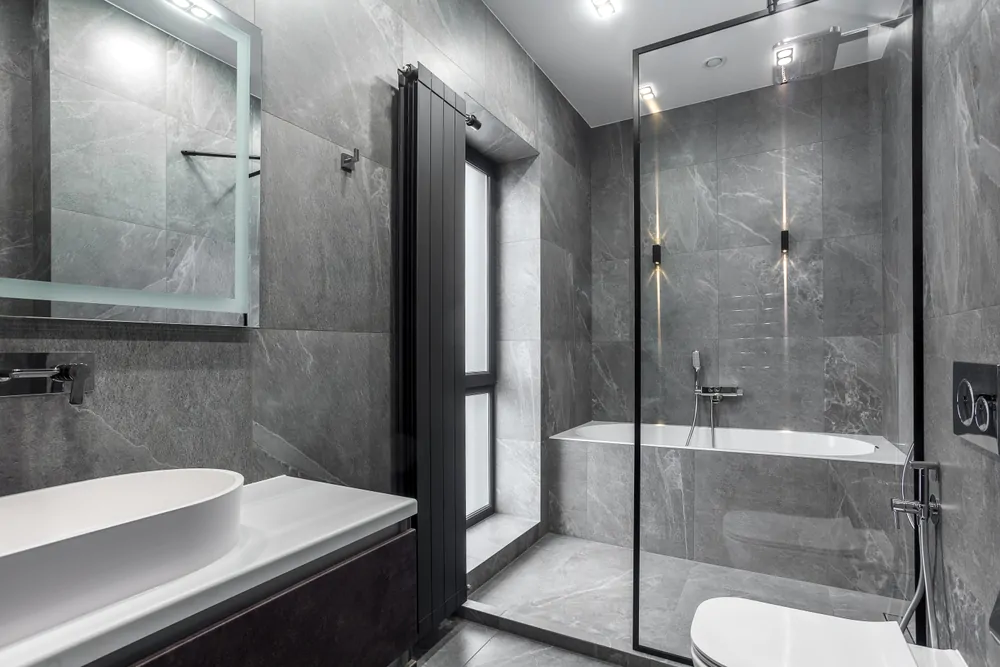
A whole-house renovation lets you keep the address, the lot, the mature landscaping, the relationships with neighbors, and the school enrollment — while creating a home that feels brand new. You can redesign every room, upgrade every system, and choose every finish. The result is a home that’s tailored to your family, in a location you’ve already proven you love.
We’ve renovated homes across the Treasure Valley for families in exactly this situation — people who spent a year searching for their “perfect” house, realized it didn’t exist on the market, and then decided to create it from the home they already owned. It’s one of the most rewarding projects we do.
When Renovation Isn’t the Right Answer
Transparency matters to us, so here’s when we tell homeowners a whole-house renovation might not be the best path. If the home has serious structural deficiencies — a compromised foundation, significant settling, or extensive termite or water damage to the frame — repair costs can push a renovation beyond the point where it makes financial sense. In those cases, building a new custom home on the same lot (or a new lot) may be the better investment.
Similarly, if you need significantly more space than your current footprint allows and your lot doesn’t support a major addition, a renovation may not solve the core problem. We always provide an honest assessment of whether renovation, addition, or new construction is the right strategy for your specific situation.
Frequently Asked Questions
How much does a whole-house renovation cost in Idaho?
Whole-house renovation costs in Idaho typically range from $150,000 to $500,000 or more, depending on the home’s size, the scope of work, and the level of finishes. A full gut renovation of a 2,000-square-foot home with new systems, new layout, and high-quality finishes generally costs $200,000 to $400,000 in the Treasure Valley. Homes requiring structural modifications or foundation work will be at the higher end.
Is it cheaper to renovate or build new in Idaho?
It depends on the extent of the renovation. A cosmetic refresh is significantly cheaper than new construction, but a full gut renovation can approach 60% to 80% of new construction costs. The decision often comes down to whether you love your location — if your lot, neighborhood, and proximity to schools or work are irreplaceable, renovation makes sense even at higher costs. New construction gives you complete design freedom but requires finding and purchasing land.
How long does a whole-house renovation take in the Treasure Valley?
A comprehensive whole-house renovation typically takes 4 to 8 months for construction, plus 1 to 3 months for design and permitting. The total timeline from initial planning to move-in is usually 6 to 12 months. Projects that involve structural changes, additions, or complex mechanical system replacements tend to fall on the longer end. Most homeowners need to plan for temporary housing during the construction phase.
Can I live in my house during a whole-house renovation?
For a true whole-house renovation, we typically recommend moving out for the duration of construction. When walls are open, systems are being replaced, and dust and debris are constant, living in the home is uncomfortable and can actually slow down the project by limiting trade access. Some homeowners stay in an RV on the property or rent nearby. If budget is a concern, phased renovations allow you to live in completed sections while other areas are under construction, though this extends the timeline.
Should I renovate my older home or add an addition instead?
If your home’s systems are sound and your main issue is space, an addition may be the better and more cost-effective choice. But if your plumbing, electrical, HVAC, and insulation are all outdated, adding square footage onto a failing infrastructure just creates a bigger problem. In many cases, homeowners benefit from combining a renovation of the existing home with a strategic addition — updating the old while expanding the new.
Ready to Get Started?
If you recognized your home in two or more of these signs, it might be time to have a real conversation about what a whole-house renovation could do for your home and your family. At Eliezer Custom Homes, we specialize in transforming Treasure Valley homes — taking houses that aren’t working and turning them into homes that are. Schedule a free consultation and let’s talk honestly about your home, your goals, and whether a renovation is the right move. No pressure, no sales pitch — just a builder who cares about getting it right.
Crafting Beautiful, Quality Homes
Here at Eliezer Custom Homes, we are committed to delivering exceptional quality and service to our clients. Our team is made up of highly skilled professionals who have extensive experience in the construction industry.
Contact Us