
Custom Home Financing in Idaho: Your Complete Guide to Construction Loans & More
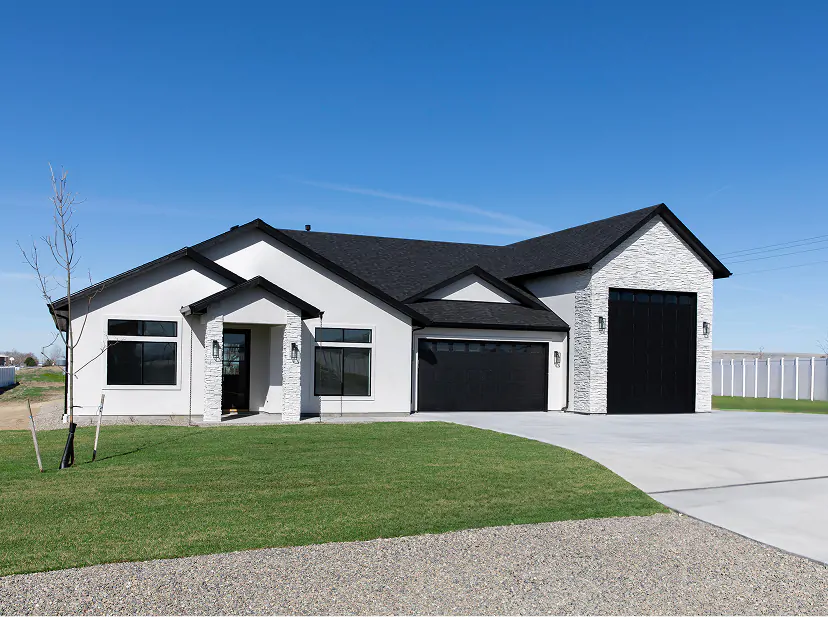
Financing Options for Building Your Dream Home
Building a custom home, adding an accessory dwelling unit, or expanding your existing home in the Treasure Valley is one of the most significant investments you’ll ever make. Understanding custom home financing in Idaho before you start is critical — the right loan structure can save you thousands of dollars and months of stress. At Eliezer Custom Homes, we’ve guided countless families through construction projects ranging from $100K additions to $500K+ new builds, and we know that a solid financing plan is the foundation everything else is built on.
This guide walks you through the most common financing options available in Idaho, how construction loans actually work, what you need to qualify, and how our team supports you through the financial side of your project.
Types of Construction Financing Available in Idaho
There’s no single “right” way to finance a construction project. The best option depends on the type of project, your financial situation, and how much flexibility you need. Here are the most common paths homeowners in the Treasure Valley use to fund their builds.

Construction-to-Permanent Loans (One-Time Close)
This is the most popular option for custom home builds in Idaho. A construction-to-permanent loan is a single loan product that funds the construction phase and then automatically converts into a standard 15- or 30-year mortgage once the home is complete. The major advantage is simplicity — you go through one application, one appraisal, and one set of closing costs.
During construction, you make interest-only payments on the funds that have been drawn. Once your home receives its certificate of occupancy, the loan rolls over into a permanent mortgage at a rate that was locked in at closing. Several Idaho-based credit unions and regional banks offer competitive construction-to-permanent products, often with more personalized service than national lenders.

Stand-Alone Construction Loans
A stand-alone construction loan covers only the building phase. Once construction is complete, you’ll need to secure a separate mortgage to pay off the construction loan. This two-step approach means two sets of closing costs and two approval processes, but it can make sense if you want to shop for the best permanent mortgage rate closer to completion or if your financial situation may improve during the build timeline.
Stand-alone construction loans in the Boise area typically carry slightly higher interest rates than traditional mortgages and have terms of 12 to 18 months. They’re best suited for borrowers who have strong financial profiles and want maximum flexibility.

Home Equity Loans & HELOCs
If you already own a home in the Treasure Valley with significant equity, a home equity loan or home equity line of credit (HELOC) can be an excellent way to finance a home addition, renovation, or ADU. Home addition financing through equity is often simpler and faster than a construction loan — the approval process is more straightforward because your existing home serves as collateral.
A HELOC is especially useful for phased projects because it works like a credit card — you draw funds as needed and only pay interest on what you’ve used. Home equity loans, on the other hand, provide a lump sum with a fixed interest rate, which can make budgeting more predictable for a defined project scope.

FHA 203(k) Rehabilitation Loans
For homeowners planning a whole-house renovation or major remodel, the FHA 203(k) loan is worth exploring. This government-backed loan rolls the purchase price (or refinance amount) and renovation costs into a single mortgage. It requires as little as 3.5% down and accepts credit scores as low as 620, making it one of the most accessible options for significant renovation work.
There are two types: the Standard 203(k) for renovations exceeding $35,000 and the Limited 203(k) for smaller projects. The Standard version requires a HUD consultant to oversee the process, which adds a layer of accountability but also some additional timeline. Not all lenders in Idaho offer 203(k) loans, so you may need to work with a specialist.

Personal Loans for Smaller Projects
For projects under $100,000 — such as a compact outdoor kitchen or a modest home office addition — an unsecured personal loan may be the simplest route. There’s no collateral required, the approval process is fast (sometimes within days), and you won’t put your home at risk. The trade-off is a higher interest rate and shorter repayment term, typically 3 to 7 years. This option works best for homeowners who want to avoid tapping into home equity or who don’t have enough equity to qualify for a HELOC.
How Construction Loans Work: The Draw Schedule Process
Construction loans operate differently from traditional mortgages, and understanding the draw schedule is key to staying on budget and avoiding delays.
Rather than receiving the full loan amount at closing, funds are released in stages — called “draws” — as construction milestones are completed. A typical draw schedule for a custom home build in Idaho might look like this:
- Draw 1: Foundation and site work (15–20% of total)
- Draw 2: Framing and rough structure (20–25%)
- Draw 3: Mechanical rough-ins — electrical, plumbing, HVAC (15–20%)
- Draw 4: Insulation, drywall, and interior finishes (15–20%)
- Draw 5: Final finishes, landscaping, and punch list (15–20%)
- Holdback: Most lenders retain 5–10% until final inspection
Before each draw is released, the lender sends an inspector to verify the work has been completed to the expected stage. During the construction phase, you’ll make interest-only payments based on the cumulative amount that has been drawn — not the full loan amount. This keeps your monthly costs lower while the home is being built.
At Eliezer Custom Homes, we coordinate directly with your lender to ensure draw requests are submitted promptly and documentation is thorough. Our detailed project schedules and transparent budgeting make the inspection and draw process smooth for all parties.
Qualifying for a Construction Loan in Boise and the Treasure Valley
Construction loans carry more risk for lenders than traditional mortgages, so the qualification requirements are stricter. Here’s what most Idaho lenders look for:
Credit Score: A minimum of 680 is standard, though 720+ will get you the best rates. Some lenders may work with scores as low as 620 for FHA construction products, but expect higher rates and larger down payment requirements.
Down Payment: Plan for 20–25% of the total project cost (land plus construction). If you already own your building lot, the equity in that land typically counts toward your down payment — a significant advantage for homeowners building on property they’ve held for years.
Debt-to-Income Ratio: Most lenders want your total monthly debt obligations (including the projected mortgage payment) to stay below 43% of your gross monthly income. In the Boise market, where home values and construction costs have risen steadily, this ratio is one of the most common hurdles borrowers face.
Builder Approval: Lenders want to know your builder is qualified and financially stable. They’ll typically ask for a resume of completed projects, proof of licensing and insurance, and references. This is one area where working with an established local builder like Eliezer Custom Homes can make a real difference — we’ve been through this process many times and maintain strong relationships with lenders throughout the valley.
Detailed Plans and Budget: Your lender will require a complete set of architectural plans, a detailed construction budget broken down by category, and a projected timeline. We provide all of this as part of our standard process, formatted specifically for lender review.
Financing an ADU in Idaho
ADU financing in Idaho can be trickier than financing a traditional home build. Because accessory dwelling units are a relatively newer concept in the Treasure Valley — and not all lenders are familiar with the local zoning rules that govern them — securing funding sometimes requires a more creative approach.
The most common options for ADU financing include:
- HELOC or Home Equity Loan: Often the simplest path if you have sufficient equity. Since the ADU is built on your existing property, lenders view this as an improvement to your primary residence.
- Construction Loan: Some lenders offer construction loans specifically for ADUs, though the minimum loan amounts may be higher than your project cost. It’s worth asking whether your lender has a small-project construction product.
- Cash-Out Refinance: If current interest rates are favorable, refinancing your primary mortgage and pulling out cash for the ADU build can be an efficient strategy — you consolidate everything into one payment.
- Local and State Programs: Idaho Housing and Finance Association (IHFA) occasionally offers programs that can assist with affordable housing construction, which may apply to certain ADU projects, particularly those intended for rental income or multigenerational living.
The challenge with ADUs is that some appraisers struggle to value them accurately because there aren’t always comparable sales in the immediate area. We recommend working with a lender who has experience with ADU projects in Ada and Canyon counties to avoid delays during the appraisal phase.
How Eliezer Custom Homes Works With Your Lender
We believe that transparent communication — one of our core values — extends to every stakeholder in your project, including your lender. Here’s how we support the financial side of your build:
- Pre-Approval Support: We provide detailed, line-item budgets and project timelines before you apply for your loan, giving your lender everything they need to assess the project.
- Draw Coordination: We submit draw requests with complete documentation — invoices, photos, inspection readiness — so funds are released without unnecessary delays.
- Change Order Transparency: If the scope changes during construction, we document every adjustment with updated costs and timelines and communicate those changes to both you and your lender.
- Builder Qualification Package: We maintain a ready-to-submit builder package that includes our licensing, insurance, financial references, and portfolio of completed projects — streamlining the lender approval of our firm.
Our goal is to make the financing process as straightforward as the construction process itself. No surprises, no confusion, no gaps in communication.
Budgeting Tips for Your Idaho Construction Project
Before you commit to a financing structure, make sure your overall budget accounts for the full picture:
Build in a contingency of 10–15%. Even the most detailed plans encounter surprises — especially in the Treasure Valley where soil conditions can vary significantly from lot to lot. Expansive clay soils in parts of Meridian and Star, for example, occasionally require additional foundation work that wasn’t apparent from initial assessments.
Don’t forget soft costs. Architectural fees, engineering, permits, utility connections, landscape design, and interior design services can add 10–20% on top of hard construction costs. Ada County building permit fees alone can run several thousand dollars depending on the project scope.
Factor in your carrying costs. During a 9- to 14-month custom home build, you’ll be making interest-only payments on your construction loan while potentially paying rent or a mortgage on your current home. Make sure your monthly budget can handle both.
Get pre-approved before you finalize your design. Knowing your actual borrowing capacity prevents the disappointment of designing a $600K home when your budget supports $450K. We always recommend having a financing conversation before we get deep into the design phase.
The Timeline: From Financing to Move-In
Understanding the full timeline helps you plan around milestones:
Pre-Approval (2–4 weeks)
Gather financial documents, meet with lenders, get pre-approved.
Design & Plans (4–12 weeks)
Finalize architectural drawings and detailed budget with your builder.
Loan Approval & Closing (4–8 weeks)
Submit full application, appraisal, and builder documentation.
Construction (4–14 months)
Varies dramatically — an ADU might take 4–6 months, while a large custom home can take 10–14 months.
Loan Conversion (2–4 weeks)
For construction-to-permanent loans, the transition is largely automatic. Stand-alone loans require a new closing.
Start the financing conversation early. The best outcomes happen when your builder, architect, and lender are all aligned from the beginning.
Frequently Asked Questions
What credit score do I need for a construction loan in Idaho?
Most Idaho lenders require a minimum credit score of 680 for a construction loan, though some programs may accept scores as low as 620 with compensating factors like a larger down payment or lower debt-to-income ratio. For the best interest rates and terms, aim for a score of 720 or higher.
How much of a down payment do I need for a custom home build?
Construction loans in Idaho typically require a 20–25% down payment based on the combined cost of land and construction. If you already own your lot, the equity in that land can often count toward your down payment, potentially reducing or eliminating additional out-of-pocket costs.
Can I finance an ADU with a home equity loan?
Yes, a home equity loan or HELOC is one of the most common ways to finance an ADU in Idaho. Since ADUs typically cost between $150,000 and $350,000, homeowners with sufficient equity can often fund the entire project this way. The approval process is generally simpler than a full construction loan.
What is a construction-to-permanent loan?
A construction-to-permanent loan is a single loan that covers both the construction phase and converts automatically into a traditional mortgage once your home is complete. This saves you from paying two sets of closing costs and simplifies the process. During construction, you typically make interest-only payments on the amount drawn.
How long does it take to get approved for a construction loan in Idaho?
The approval process typically takes 30 to 60 days from application to closing, depending on the complexity of the project and the lender. Having your builder selected, plans finalized, and financial documents organized ahead of time can speed up the process significantly.
Does Eliezer Custom Homes help with the financing process?
While we are not a lender, we work closely with your financing team throughout the project. We provide detailed project budgets and timelines that lenders require, coordinate draw schedules, and can recommend local Idaho lenders who specialize in construction financing. Our transparent pricing approach makes the lending process smoother for everyone involved.
Our Recent Custom Homes
Proudly Building In

Star, ID
Boise, ID
Eagle, ID
Meridian, ID
Surrounding Treasure Valley Communities
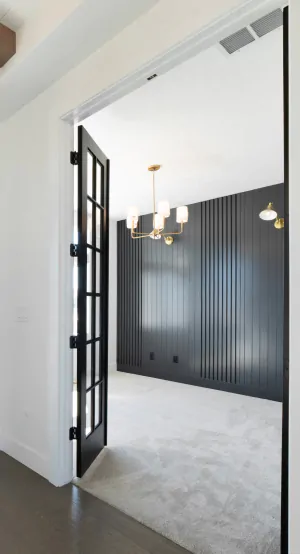
Ready to Get Started?
Understanding your financing options is a crucial first step — but you don’t have to figure it all out alone. At Eliezer Custom Homes, we’ve helped families across Star, Boise, Eagle, Meridian, and the wider Treasure Valley navigate the financial side of building with confidence and clarity.
Whether you’re planning a custom home build, an ADU, or a home addition, we’re happy to discuss your project scope and budget during a free consultation — no commitment required.
Schedule a free consultation or call us today to start the conversation.