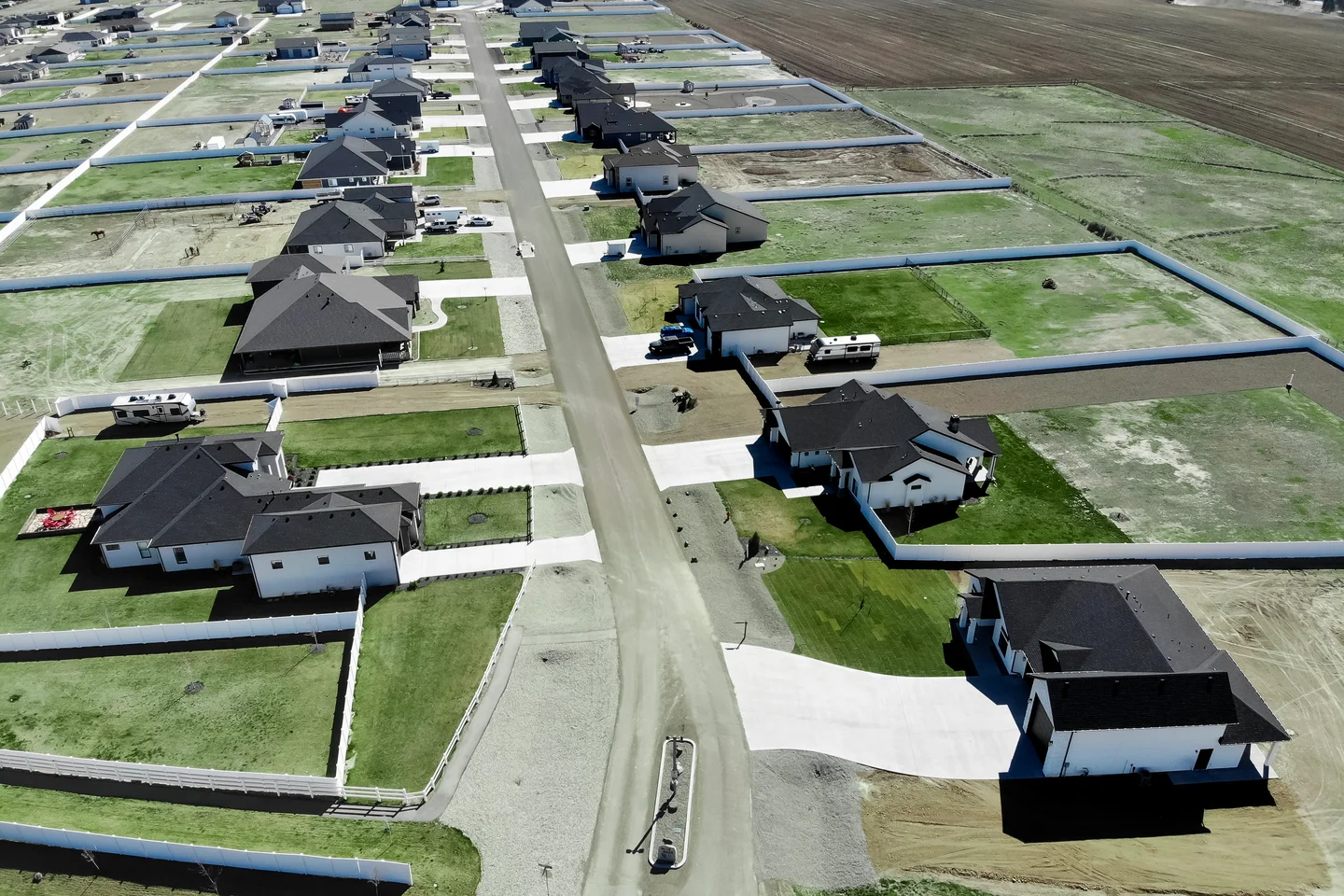
Meridian, Idaho, is a city in motion. As one of the fastest-growing communities in the country, it represents a fascinating intersection of the old and the new. You see it in the landscape, where historic farmland meets bustling new subdivisions, and you see it in the homes. Nowhere is this blend of styles more apparent—or more important—than in the kitchen.
The kitchen is the command center of the home. It is where you start your day with a cup of coffee, where the kids drop their backpacks after school, and where friends gather on Friday nights. Because it is such a pivotal space, deciding on a design direction for a remodel is a high-stakes decision.
Homeowners in Meridian often find themselves torn between two distinct aesthetic worlds: the sleek, minimalist appeal of Modern Design and the warm, timeless comfort of Traditional Design. Both have incredible merits, and both can increase the value of your property. But which one is right for your lifestyle, your home’s architecture, and your personal taste?
At Eliezer Custom Homes, we have guided countless homeowners through this decision-making process. This guide will take a deep dive into the “Modern vs. Traditional” debate, specifically tailored for the Meridian market, helping you navigate the choices to build a space you will love for years to come.
Defining the Contenders: What Do These Styles Really Mean?
Before we can compare them, we must define what we are talking about. “Modern” and “Traditional” are broad terms that are often misused. Let’s break down the core DNA of each style.
The Modern Kitchen
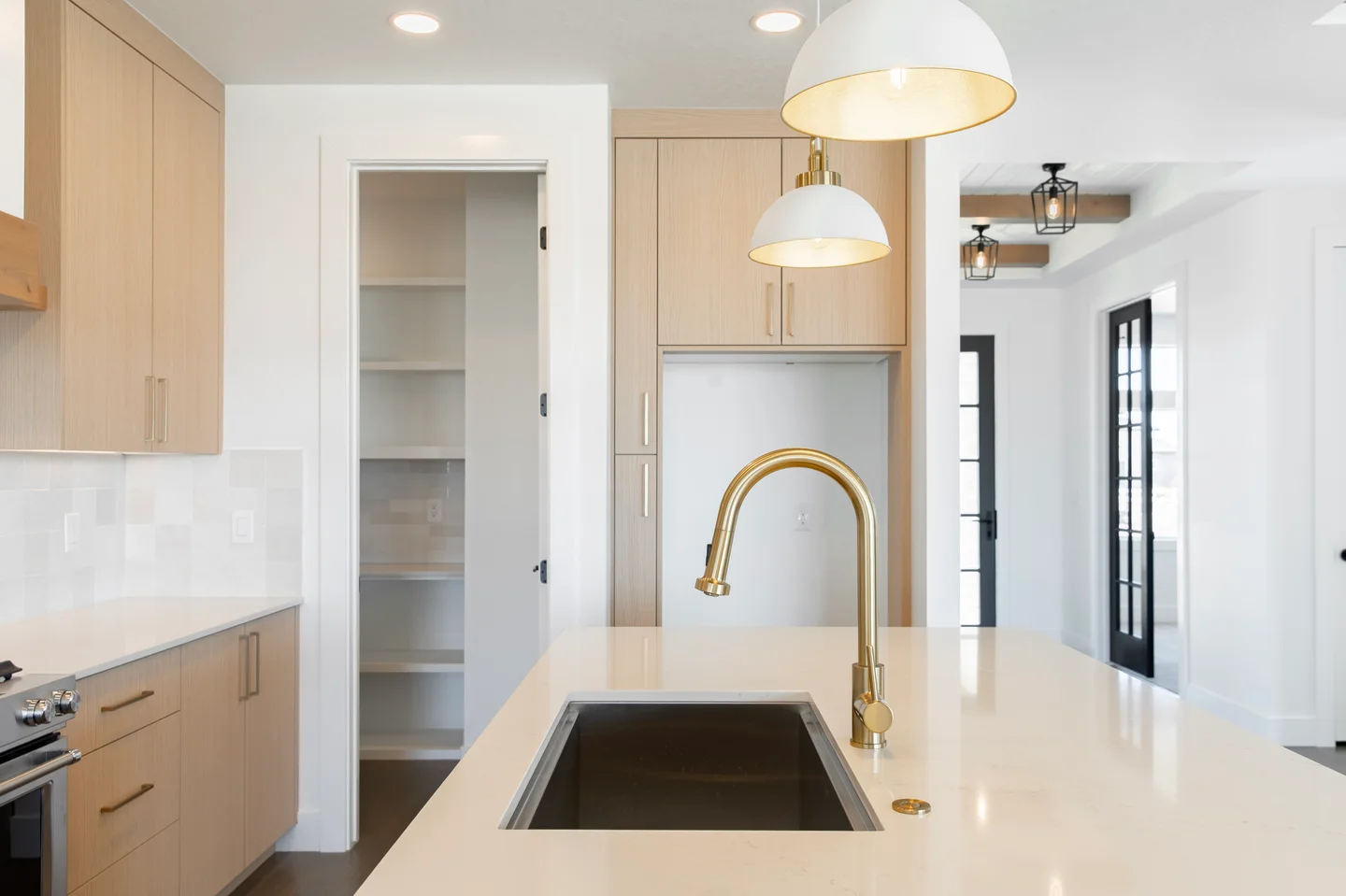
Modern design is rooted in the idea that “form follows function.” Born from the mid-20th-century movements, it rejects excessive ornamentation in favor of simplicity. A modern kitchen in Meridian isn’t necessarily cold or sterile; it is efficient, uncluttered, and sophisticated.
Key Characteristics:
- Clean Horizontal Lines: Emphasis on long, wide lines in cabinetry and layout.
- Minimalism: A lack of clutter. Appliances are often hidden or integrated.
- Industrial Materials: Use of concrete, steel, glass, and engineered stone.
- Frameless Cabinetry: also known as full overlay, where you see very little of the cabinet box.
- Monochromatic Palettes: Often leaning on whites, greys, blacks, or bold pops of primary colors.
The Traditional Kitchen
Traditional design is all about detail, craftsmanship, and warmth. It draws inspiration from 18th and 19th-century European and American styles. In a family-centric area like Meridian, traditional kitchens often feel like the “hearth” of the home—inviting, cozy, and rich in history.
Key Characteristics:
- Architectural Details: Crown molding, corbels, decorative legs on islands, and raised-panel doors.
- Natural Materials: A heavy emphasis on natural stone (granite, marble) and stained woods.
- Ornate Lighting: Chandeliers or lantern-style fixtures.
- Warm Color Palettes: Creams, beiges, warm woods, and soft pastels.
- Furniture-Style Elements: Cabinets that look like hutches or freestanding furniture pieces.
The Comparison: Feature by Feature
To make the best choice for your remodeling and renovations project, it helps to look at specific elements of the kitchen and how each style approaches them.
1. Cabinetry: The Face of the Kitchen
The cabinetry takes up the most visual real estate in your kitchen, so the door style you choose dictates the entire vibe.
Modern Approach:
Modern cabinetry is all about the “slab” door or the flat-panel door. There are no raised panels, no beveling, and often, no visible hardware. The goal is to create a seamless wall of storage. In high-end Meridian remodels, we see a trend toward high-gloss finishes or textured melamine that mimics wood grain but offers better durability. “Push-to-open” technology is popular here, eliminating the need for handles entirely.
Traditional Approach:
Traditional cabinetry celebrates the carpenter’s art. The most common style is the raised panel door, often with an arch or intricate beadwork. Inset cabinetry—where the door sits flush inside the frame rather than on top of it—is a hallmark of high-end traditional design. You will also see glass-front upper cabinets with decorative mullions, designed to display fine china or heirlooms.
The Verdict for Meridian:
If you live in a newer build near the Village or Ten Mile, slab cabinets might fit the architectural vibe perfectly. However, if you are in an established neighborhood with older homes, the richness of traditional cabinetry often respects the home’s original character better.
2. Countertops: Nature vs. Engineering
Modern Approach:
Modern kitchens favor uniformity. Quartz is the king here. It is man-made, non-porous, and can be manufactured to be solid white, concrete grey, or jet black without the “busy” veins of natural stone. We also see stainless steel countertops or “waterfall” edges, where the countertop material spills over the side of the island to the floor, creating a dramatic, sculptural effect.
Traditional Approach:
Traditionalists love the unpredictability of nature. Granite and marble are the staples. The movement, veining, and unique imperfections of a slab of granite are seen as art. Edges are often decorative—think ogee or bullnose edges—rather than the square, eased edge of a modern counter. Butcher block is also frequently used on islands to add warmth and texture.
The Verdict for Meridian:
Meridian families are busy. While the look of marble is beloved in traditional design, many local homeowners opt for Quartz that looks like marble. This provides the traditional aesthetic with modern durability—a perfect hybrid solution.
3. Backsplashes: Texture vs. Pattern
Modern Approach:
In a modern kitchen, the backsplash is often an extension of the countertop. Using a full slab of quartz or stone on the wall creates a clean, grout-free look that is incredibly easy to clean. Alternatively, glass tile or large-format geometric tiles are used to add a subtle texture without overwhelming the eye.
Traditional Approach:
Here, the backsplash is a jewelry piece. Subway tile is the classic choice, but in a traditional kitchen, it might be handmade ceramic with a crackle finish. You will also see intricate mosaics, patterns behind the range (like a herringbone inset), and the use of natural tumbled stone to evoke an Old World feel.
4. Layout and Space Planning
While the look is different, does the function change? Absolutely.
Modern Approach:
Modern design heavily favors the “Open Concept.” The kitchen is rarely a separate room; it flows directly into the living and dining areas. The kitchen island is usually massive and serves as a dining table, desk, and prep station all in one. The goal is social integration. If your current home feels boxed in, you might need to look into additions or structural changes to achieve this open flow.
Traditional Approach:
Traditional layouts respect the “zone” concept. While open kitchens are popular everywhere, traditional design often maintains distinct boundaries. There might be a cased opening separating the kitchen from the dining room, or a layout that focuses on a “work triangle” that is slightly more enclosed to hide the mess of cooking from guests.
5. Lighting: Hidden vs. Statement
Modern Approach:
Lighting in a modern kitchen is often felt but not seen. Recessed LED strip lighting under cabinets, above cabinets, and even under the toe kick of the island creates layers of light without visual clutter. Pendants, if used, are usually sculptural, geometric, or clear glass globes.
Traditional Approach:
Lighting is a major decorative element. A large, ornate iron chandelier over the island is a common centerpiece. Sconces might be placed over open shelving or windows. The fixtures themselves are made of brass, oil-rubbed bronze, or polished nickel, adding metallic warmth to the room.
The “Transitional” Style: Meridian’s Favorite Compromise?
If you are reading this and thinking, “I like the clean lines of modern, but the warmth of traditional,” you are not alone. In fact, you are in the majority. This middle ground is called Transitional Design, and it is currently the most popular style in the Treasure Valley.
Transitional design blends the best of both worlds:
- Shaker Cabinets: Simple enough for modern tastes, but framed enough for traditionalists.
- Mix of Materials: Stainless steel appliances paired with warm wood floors.
- Neutral Palette with Texture: Using woven textures or natural wood to warm up a white/grey palette.
This style is often exemplified by the “Modern Farmhouse” look that has swept through Star, Eagle, and Meridian. It allows for a relaxed, approachable feel that fits the Idaho lifestyle perfectly.
Which Style Costs More?
Budget is always a primary concern in any remodel. Is one style inherently more expensive than the other?
The short answer is: Not necessarily, but the drivers of cost are different.
- Traditional Costs: The cost here is often in the labor and woodworking. intricate molding, corbels, inset doors, and decorative finishes require highly skilled carpentry. A complex tile backsplash is labor-intensive to install.
- Modern Costs: The cost here is often in the mechanisms and materials. High-end modern hardware (lifts that open cabinets upwards, hidden hinges), large slabs of quartz (which are heavy and difficult to transport), and premium appliances drive the budget. Achieving true minimalism is difficult because you cannot hide imperfections with trim; the walls and floors must be perfectly straight, which can require significant prep work.
Regardless of the style you choose, working with a team that understands custom home building ensures that your budget is allocated to the elements that matter most to you.
Lifestyle Considerations for Meridian Homeowners
Beyond aesthetics and budget, your kitchen must support how you actually live. Here are a few practical questions to ask yourself before finalizing your design.
1. How much do you cook?
If you are an avid chef who cooks messy meals from scratch every night, a strict modern kitchen with high-gloss surfaces might drive you crazy with fingerprints. A traditional kitchen with slightly more pattern and texture can hide a bit of “life” better. Conversely, modern slab countertops are often easier to wipe down than tile grout.
2. Do you have young children?
Sharp corners on a modern square-edged island can be a hazard for toddlers. Traditional rounded edges are softer. However, modern flat-front cabinets are much easier to clean spaghetti sauce off of than raised panel doors with crevices where dust and food get stuck.
3. What is the architectural style of your home?
Meridian has a diverse housing stock.
- Mid-Century Neighborhoods: A sleek, modern remodel often looks fantastic and appropriate.
- Craftsman or Victorian Homes: A hyper-modern kitchen can feel jarring and out of place. A traditional or transitional approach usually yields a better Return on Investment (ROI) because it respects the home’s integrity.
- New Construction: This is a blank canvas. You have the freedom to define the character.
4. Resale Value
Both styles sell well if done correctly. However, extreme versions of either can be polarizing. A hyper-futuristic kitchen might alienate buyers looking for “cozy,” while a heavily ornate traditional kitchen can feel “dated” to younger buyers. Sticking to a transitional blend or a restrained version of your chosen style is often the safest bet for resale value in the Meridian market.
How Eliezer Custom Homes Can Help
Choosing a design style is just the first step. Executing that vision requires a team of skilled craftsmen, designers, and project managers. At Eliezer Custom Homes, we don’t just build houses; we curate environments.
Our Approach to Modern
For our clients seeking modern spaces, we focus on precision. We source the highest quality engineered materials and work with installers who understand the exacting tolerances required for minimalist design. We can help you integrate smart home technology, from voice-activated faucets to app-controlled lighting, ensuring your kitchen is as smart as it is beautiful.
Our Approach to Traditional
For those who crave tradition, we bring our deep experience in custom carpentry to the forefront. We understand proportion and scale—essential elements in traditional design. We can help you source authentic materials, like reclaimed wood beams or hand-forged hardware, that give your kitchen a sense of soul and history.
The Eliezer Difference
We believe in transparency and communication. A kitchen remodel disrupts your life, and our goal is to make the process as smooth as possible. From the initial design consultation to the final walkthrough, we are your partners. You can learn more about our philosophy and our team on our About Us page.
Making the Final Decision
If you are still on the fence, try this exercise:
- Look at your wardrobe: Do you prefer tailored suits and solid colors (Modern), or do you love layers, textures, and patterns (Traditional)?
- Look at your car: Do you drive a sleek electric vehicle (Modern) or a rugged SUV with leather seats (Traditional)?
- Scroll your feed: Look at your saved photos on Pinterest or Instagram. Is there a common thread?
Ultimately, there is no “wrong” choice. The best kitchen is the one that makes you smile when you walk in to pour your morning coffee. Whether that kitchen is a sleek, white minimalist haven or a warm, wood-toned gathering place, it is yours.
Ready to Transform Your Meridian Home?
Your dream kitchen is waiting to be built. Whether you have decided on a specific style or need help blending your favorite elements of both, Eliezer Custom Homes is here to guide you.
We serve homeowners across the Treasure Valley, providing top-tier craftsmanship and personalized service. Don’t let the overwhelming number of choices paralyze you. Let us help you clarify your vision and bring it to life.
If you are ready to discuss your project, verify your budget, or just explore the possibilities, we invite you to reach out. Visit our Contact Us page today to schedule your complimentary consultation. Let’s build something extraordinary together.
Frequently Asked Questions: Modern vs. Traditional
To further assist you, here are some common questions we receive from Meridian homeowners regarding these design styles.
Can I mix metals in a traditional kitchen?
Absolutely. In fact, mixing metals (like brass and nickel) gives a traditional kitchen a curated, “collected over time” look that prevents it from feeling like a showroom.
Is “Modern” the same as “Contemporary”?
Not exactly. “Modern” refers to a specific design era (mid-20th century). “Contemporary” simply means “what is popular right now.” currently, contemporary design in Meridian borrows heavily from modern aesthetics, so the terms are often used interchangeably.
Which flooring is better for modern kitchens?
Large-format tile (24×24 or larger) or polished concrete are staples of modern design. However, wide-plank light oak flooring is increasingly popular in modern spaces to add a touch of organic warmth without the visual noise of traditional wood grain.
How do I add warmth to a modern kitchen?
This is the biggest challenge with modern design. We recommend using wood accents (like open shelving or bar stools), adding texture through rugs or window treatments, and ensuring your lighting temperature is warm (2700K-3000K) rather than cool blue.
Can a traditional kitchen have smart appliances?
Yes! Many luxury appliance brands offer “panel-ready” options. This allows you to cover your high-tech smart fridge or dishwasher with a custom cabinet panel that matches your traditional woodwork, keeping the technology hidden but accessible.
Remodeling your kitchen is a journey. It requires patience, planning, and a vision. By understanding the fundamental differences between Modern and Traditional design, you are better equipped to make choices that align with your life in Meridian. Whether you lean toward the future or the past,Eliezer Custom Homes is committed to building excellence in the present.
Crafting Beautiful, Quality Homes
Here at Eliezer Custom Homes, we are committed to delivering exceptional quality and service to our clients. Our team is made up of highly skilled professionals who have extensive experience in the construction industry.
Contact Us