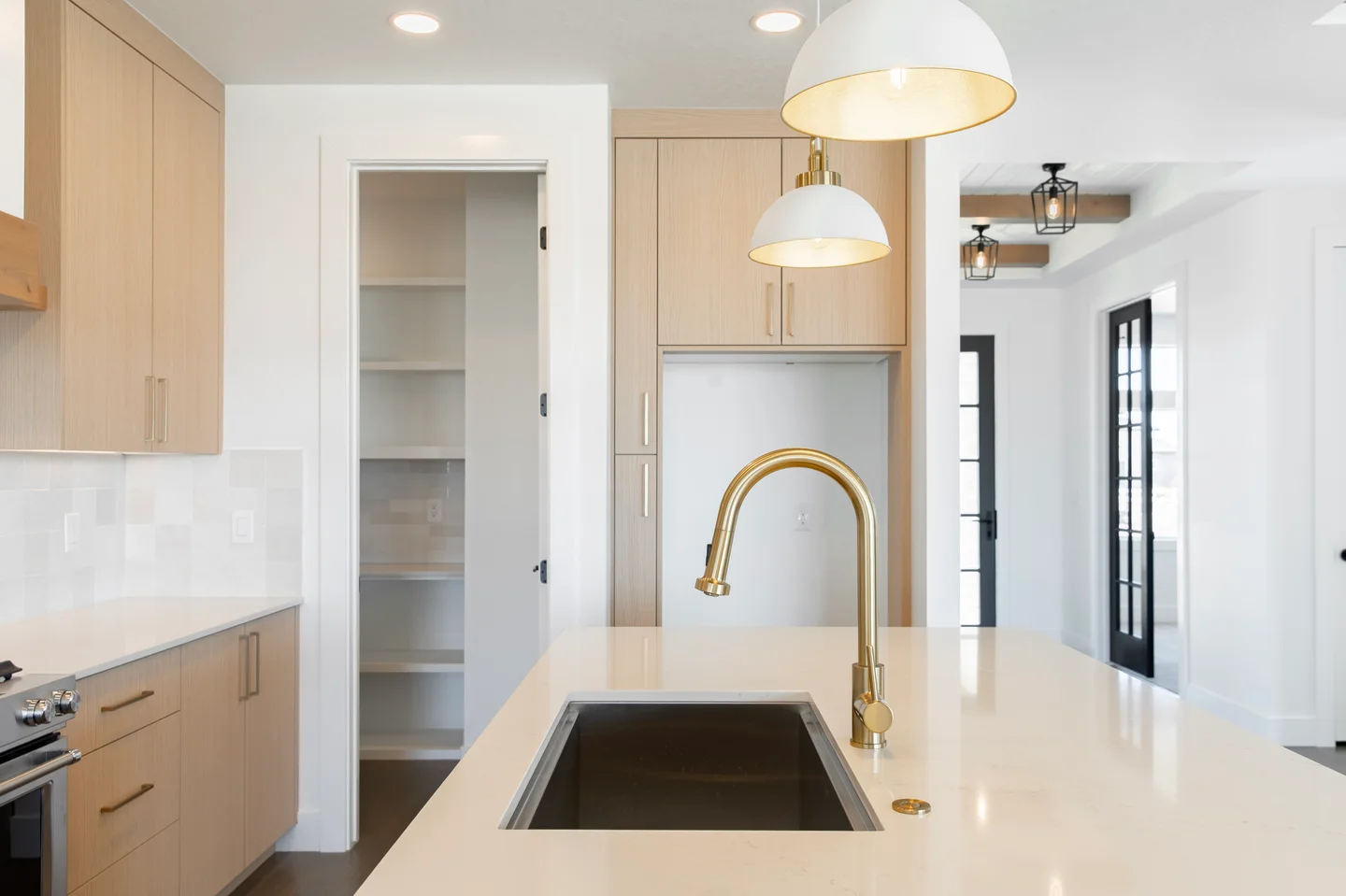

Meridian, Idaho, sits at the heart of the Treasure Valley’s explosive growth. What was once a quiet farming community is now a bustling hub of families, businesses, and beautiful neighborhoods. As the city has grown, so has the desire for homeowners to improve their living spaces. Whether you are in an older subdivision near downtown Meridian or a newer build off Chinden that just needs some personalization, remodeling is often the best way to get the home you want without leaving the location you love.
However, the excitement of browsing Pinterest for kitchen islands or imagining a spa-like master bath often hits a wall when the financial reality sets in. “How much is this going to cost?” is the question that keeps homeowners up at night.
Budgeting for a remodel is more than just picking a number you are comfortable with. It requires understanding the local market in Meridian, knowing the difference between “HGTV prices” and real-world construction costs, and preparing for the unexpected. A well-planned budget is the roadmap that guides your project from a stressful chaotic mess to a successful, value-adding investment.
In this comprehensive guide, we will walk you through the step-by-step process of budgeting for a home remodel in Meridian. We will cover how to assess your financing options, how to research local costs, and how to allocate your funds effectively to ensure your vision matches your wallet.
Why Budgeting in Meridian is Unique
Before diving into the spreadsheet, it is important to understand the local context. Remodeling in Meridian isn’t the same as remodeling in rural Idaho or downtown Seattle. The local economy and housing market influence your budget in specific ways.
1. High Demand for Skilled Trades
Meridian is growing fast. This means plumbers, electricians, and finish carpenters are in high demand. When demand outstrips supply, labor costs rise. A budget that might have worked five years ago is likely insufficient today simply due to the cost of securing quality labor.
2. Rising Home Values
The silver lining to the cost of remodeling is the equity in your home. Meridian home values have seen significant appreciation. This gives you more room to invest in your home without “over-improving” for the neighborhood. A $100,000 kitchen remodel in a neighborhood where homes are selling for $700,000 makes financial sense; the same remodel in a $200,000 market might not.
3. Supply Chain Specifics
While global supply chains have stabilized, regional availability can still impact pricing. Being in the Intermountain West means some materials have higher shipping costs. Working with a local builder like Eliezer Custom Homes helps navigate these local nuances, as we have established relationships with local vendors to get fair pricing.
Step 1: Define Your Financial Comfort Zone
The first step of budgeting happens before you ever call a contractor. You need to determine how much you are willing and able to spend. This is not about what the remodel costs yet; it is about what you can afford.
Asses Your Financing Options
How will you pay for this renovation?
- Cash: The simplest method. It avoids interest payments and loan fees. However, it ties up liquid capital.
- Home Equity Line of Credit (HELOC): Very popular in Meridian given recent equity gains. A HELOC acts like a credit card secured by your home. You only pay interest on what you use. This is great for remodeling because you can draw funds as bills come in.
- Home Equity Loan: A lump sum loan with a fixed interest rate. Good if you know the exact cost upfront.
- Construction/Renovation Loan: Based on the future value of your home after the renovation. This is useful for massive additions where the current equity isn’t enough to cover the cost.
Set a Hard Ceiling
Determine your absolute maximum. If you have $80,000 in cash and are approved for a $50,000 loan, your absolute ceiling is $130,000. However, you should not budget to spend the entire $130,000. You need to leave room for the unexpected (more on that later).
Step 2: Establish Your Priorities (The “Must-Haves”)
Budgeting is an exercise in prioritization. Unless you have unlimited funds, you cannot have everything. You need to separate your “Needs” from your “Wants.”
Create a Wish List
Walk through your home and write down everything you hate and everything you dream of changing. Don’t censor yourself yet.
- “Kitchen feels dark.”
- “Need a mudroom for the kids’ backpacks.”
- “Master bath tile is outdated.”
- “Want a covered patio for summer BBQs.”
Categorize and Rank
Now, take that list and sort it into three columns:
- Must-Haves: Structural repairs, safety updates, and functional necessities. (e.g., The roof is leaking, the kitchen layout is non-functional).
- High-Priority Wants: Things that will significantly improve your quality of life. (e.g., Quartz countertops, heated floors in the bathroom).
- Nice-to-Haves: Luxury items you can live without or add later. (e.g., Smart blinds, a built-in coffee maker).
Knowing these priorities helps when the initial estimate comes back high. You will immediately know what to cut (the coffee maker) to save the things you love (the countertops).
Step 3: Researching “Real” Costs vs. “TV” Costs
One of the biggest hurdles in budgeting is the distortion created by home renovation television shows. On TV, a couple remodels a whole kitchen in three days for $15,000. In reality, $15,000 might barely cover the cabinetry in a standard Meridian kitchen.
Cost vs. Value Reports
Look for legitimate data sources like the “Cost vs. Value Report” for the Mountain region. This gives average costs for mid-range and upscale remodels in our specific geographic area.
Preliminary Shopping
Go to a local showroom in the Treasure Valley. Look at the price tags on:
- Appliances: A standard fridge is $1,500; a built-in Sub-Zero is $12,000.
- Flooring: Laminate might be $3/sq ft; site-finished hardwood might be $12/sq ft.
- Cabinets: Ask for a ballpark per linear foot for semi-custom cabinets.
This “window shopping” helps you calibrate your expectations. If you fall in love with a $10,000 range, you need to put that in your spreadsheet immediately.
Step 4: The Breakdown of a Remodel Budget
A healthy budget is not just one number. It is a pie chart. Understanding how the money is distributed helps you see where you can save.
Generally, a professional remodel budget breaks down as follows:
1. Labor (30% – 35%)
This is the human element. Demolition crews, framers, plumbers, electricians, drywallers, painters, and tile setters. In Meridian, skilled labor is the most valuable commodity. Do not try to cut costs here by hiring unlicensed handy-people. Poor labor leads to poor quality that costs twice as much to fix later.
2. Materials (40% – 45%)
This includes both rough materials (lumber, drywall, piping) and finish materials (faucets, tile, lights). This is the area where you have the most control. You can choose a $200 toilet or a $800 toilet. The labor to install them is the same, but the material cost shifts the budget.
3. General Conditions and Management (15% – 20%)
This covers the builder’s overhead, insurance, project management, and logistics (dumpsters, portable toilets, floor protection). This is the cost of having a professional manage the chaos so you don’t have to.
4. Design and Fees (5% – 10%)
Architectural plans, structural engineering, and interior design fees. For significant remodeling and renovations, professional design is not a luxury; it is a necessity to ensure the build goes smoothly.
Step 5: The “Oh No” Fund (Contingency)
This is the most critical step that homeowners often skip. You must budget for the unexpected. In renovation, “surprises” are guaranteed, especially in older homes.
How Much to Set Aside?
- Newer Home (<10 years old): 10% – 15% contingency.
- Older Home (>20 years old): 15% – 20% contingency.
Common Meridian Remodel Surprises
- Foundation Issues: Meridian has varied soil types. We sometimes find settling or cracks in foundations that need engineering repairs.
- Code Compliance: If you open a wall, you often have to bring the electrical and plumbing up to current code. This might mean upgrading an electrical panel you didn’t plan on touching.
- Water Damage: It is very common to pull out a bathtub and find rot in the subfloor from a slow leak that went unnoticed for years.
If you budget $50,000 for a kitchen, you should only contract for about $42,000 of work, keeping $8,000 in reserve. If you don’t use it, great! You can buy new furniture or put it back in the bank. But if you need it, you won’t be scrambling for a loan.
Step 6: Get Professional Estimates
Once you have your rough numbers and your wish list, it is time to talk to the pros. Do not rely on online calculators. You need a contractor to walk your specific property in Meridian.
The “Apples to Apples” Comparison
When you get estimates, you must ensure they cover the same scope.
- Contractor A might bid $40,000 but excludes painting and flooring.
- Contractor B bids $55,000 but includes everything turn-key.
Contractor B is actually the better deal because they are giving you a complete picture. Contractor A’s price will balloon once you add in the missing items.
Discuss “Allowances”
Contractors use allowances for items you haven’t picked yet (e.g., “Allow $5,000 for lighting”). Ask if these allowances are realistic for the quality you want. If you want a chandelier that costs $2,000, a $500 total lighting allowance is going to break your budget.
At Eliezer Custom Homes, we strive to set realistic allowances based on our initial conversations so your budget reflects your taste.
Step 7: Value Engineering (How to Cut Costs Smartly)
If the professional estimates come back higher than your “Hard Ceiling” from Step 1, don’t panic. This is normal. Now comes the process of “Value Engineering.” This means getting the same function for less money.
1. Keep the Footprint
Moving plumbing and gas lines is expensive. Moving walls is expensive. The cheapest way to remodel a bathroom is to leave the toilet, sink, and shower exactly where they are and just replace the finishes.
2. Standard Sizes
Custom cabinetry is beautiful, but expensive. Semi-custom cabinets in standard sizes (12″, 18″, 24″ widths) are much more affordable. Standard size windows and doors are cheaper than custom orders.
3. Look-Alike Materials
Love the look of Marble? It is expensive and high maintenance. Quartz or high-end Porcelain tile can mimic the look of marble perfectly for a fraction of the cost and with better durability.
4. Phasing the Project
If you can’t afford the whole dream, break it into chunks. Do the kitchen this year. Do the master bath in two years. This prevents you from over-leveraging yourself financially.
Step 8: Factor in “Life Costs” During Construction
The construction contract isn’t the only cost you will incur. Remodeling disrupts your life, and that disruption has a price tag.
Eating Out
If your kitchen is torn apart for 8 weeks, you will be ordering a lot of takeout. Budget an extra $500-$1,000 a month for food.
Temporary Housing
If you are doing a whole-house remodel or adding a second story, you might need to move out for safety. Factor in the cost of a short-term rental or Airbnb.
Storage
You might need to rent a POD or a storage unit to hold your furniture while the floors are being redone.
Step 9: Track Your Spending Relentlessly
Once the project starts, the budgeting doesn’t stop. You need to be a project manager for your own wallet.
Change Orders
This is the #1 budget killer. A “Change Order” happens when you change your mind after the work has started.
- “Actually, can we move that light over two feet?”
- “I decided I want the upgraded tile instead.”
Every time you do this, there is an administrative fee plus the cost of the work. Sometimes it involves undoing work that was already done.
Rule of Thumb: Make all your decisions before construction starts. Once the train leaves the station, try not to change the track.
The Spreadsheet
Keep a simple spreadsheet.
- Column A: Contract Price
- Column B: Contingency Fund
- Column C: Amount Paid to Date
- Column D: Remaining Balance
Update this every time you write a check or approve a change order.
Common Budgeting Pitfalls to Avoid in Meridian
1. Over-Improving for the Neighborhood
While Meridian is appreciating, you still need to be mindful of your specific subdivision. Adding a $150,000 addition to a home in a starter-home neighborhood might not yield a return on investment when you sell. Look at the “comps” (comparable sales) in your area to see the ceiling of home values.
2. Ignoring the “Boring” Stuff
Homeowners love spending money on countertops and tile. They hate spending money on electrical panels, water heaters, and insulation. But if you blow your budget on the pretty stuff and ignore the aging mechanical systems, you are building a castle on sand. Always budget for the infrastructure first.
3. Hiring the Cheapest Bid
We cannot stress this enough: The lowest bid is often the most expensive in the long run.
If a bid is 20% lower than everyone else, they are missing something. Either they forgot to include a huge chunk of work, or they are cutting corners on quality. You will likely pay the difference (and more) to fix their mistakes later.
Why Working with a Custom Builder Helps Your Budget
It might seem counterintuitive that hiring a high-end custom builder helps you budget, but it is true. A “man with a van” might give you a cheap price, but without a contract, a schedule, or a detailed scope, that price is a mirage.
At Eliezer Custom Homes, our process is designed to protect your budget:
- Detailed Planning: We plan the build on paper before we swing a hammer. This minimizes surprises.
- Transparent Pricing: You see exactly where the money goes.
- Fixed Contracts: We aim for fixed-price contracts whenever possible, so you aren’t wondering what the final bill will be.
- Vendor Relationships: We use our volume to get better pricing on materials than you could get walking in off the street.
Conclusion: Confidence Comes from Preparation
Budgeting for a home remodel in Meridian doesn’t have to be a source of anxiety. It is simply a math problem. By being realistic about your finances, researching local costs, and building in a safety net for the unexpected, you can approach your renovation with confidence.
Remember, a budget is not a restriction; it is a tool. It empowers you to make smart decisions. It allows you to say “Yes” to the things that matter most to you and “No” to the things that don’t.
If you are ready to start the conversation about your remodel, we are here to help. We can look at your home, listen to your vision, and help you develop a preliminary budget that makes sense for your goals.
Don’t let the fear of the unknown stop you from loving your home again. Contact us today to schedule a consultation. Let’s build something beautiful—and on budget—together.
Crafting Beautiful, Quality Homes
Here at Eliezer Custom Homes, we are committed to delivering exceptional quality and service to our clients. Our team is made up of highly skilled professionals who have extensive experience in the construction industry.
Contact Us