Idaho homes are known for their spacious feel, often featuring vaulted ceilings and grand entryways that capture the open spirit of the Gem State. While these architectural features are stunning, they often leave a significant amount of “dead air” above the living space. As families grow and the need for functional square footage increases, many homeowners find themselves looking for ways to expand. Before you look outward into your backyard, have you considered looking up?
Loft add-ons are becoming an increasingly popular renovation choice across the Treasure Valley. By capitalizing on the vertical volume of your home, you can add valuable living space without altering your home’s footprint or sacrificing your garden. Whether you need a secluded home office, a vibrant playroom for the kids, or a cozy reading nook, a loft offers a versatile solution.
In this extensive guide, we will explore everything you need to know about adding a loft to your Idaho home. We will cover structural feasibility, design inspiration, heating and cooling considerations, and the construction process. If you are ready to elevate your living experience, read on.
The Appeal of Vertical Living in Idaho
Why are loft additions gaining so much traction in cities like Boise, Meridian, and Eagle? The answer lies in the intersection of economics, aesthetics, and practicality.
Preserving Your Lot Size
Idahoans value their outdoor space. We love our patios, our gardens, and our backyards. Traditional additions typically require pouring a new foundation and extending the house outward, which eats into your green space. A loft add-on works entirely within the existing walls of your home. This is particularly advantageous in subdivisions where lot lines are tight or where homeowners want to preserve every inch of their landscaping.
Cost-Effective Expansion
While no renovation is “cheap,” building up is often more cost-effective than building out. With a loft, the expensive elements of the home’s shell—the roof and the foundation—are already in place. You are primarily paying for framing the floor, finishing the interior, and adding access via stairs. This can yield a lower cost per square foot compared to ground-level additions.
Architectural Drama
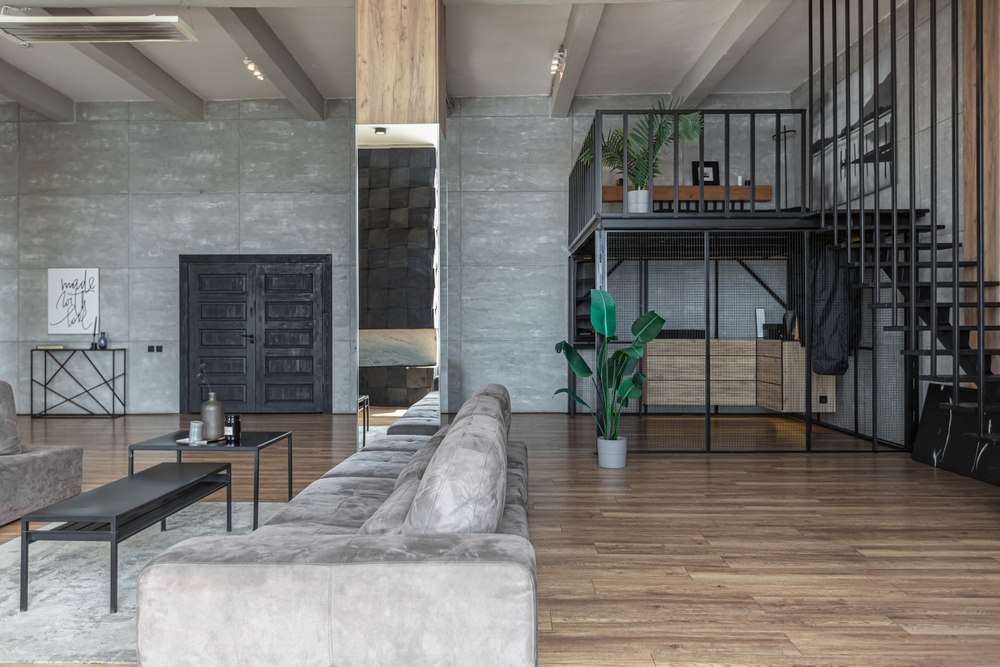
Beyond the practical benefits, a loft adds a layer of architectural interest to a home. It breaks up the monotony of high, empty walls and creates dynamic sightlines. A well-designed loft overlooking a great room can serve as a stunning focal point, blending functionality with high-end design.
Assessing Your Home: Is a Loft Feasible?
Not every home with a high ceiling is a candidate for a loft. Before you start picking out furniture, you need to determine if your structure can support the addition. This is where professional expertise becomes non-negotiable.
Structural Integrity and Foundation
The most critical question is whether your existing walls and foundation can bear the weight of a new floor, furniture, and people. Most vaulted ceilings were not originally framed to support a second level. This means a structural engineer will likely need to evaluate your home.
In many cases, we may need to reinforce the foundation or add support columns. Sometimes, “sistering” the wall studs (adding extra studs alongside existing ones) provides the necessary strength. At Eliezer Custom Homes, we prioritize safety and longevity above all else. We ensure every project meets or exceeds local building codes.
Ceiling Height Requirements
Building codes in Idaho dictate minimum ceiling heights for habitable spaces. Generally, you need at least 7 feet of headroom above the new loft floor and sufficient clearance below it. If your vaulted ceiling peaks at 12 feet, a loft might be tight or impossible without raising the roof (a much more complex project). Ideally, you want a peak of 16-18 feet or higher to comfortably fit a loft while maintaining an open feel below.
Access and Staircases
You need a way to get up there. A ladder might work for a tiny reading nook, but for a legal bedroom or office, you need a staircase. Stairs take up floor space on the lower level—typically about 30 to 40 square feet. You must consider where this footprint will land. Will it block a hallway? Will it eat into your living room?
Spiral staircases are a popular space-saving option, but they can be difficult to navigate with furniture. Traditional straight or L-shaped stairs offer safer access and can include storage underneath, but they require a larger footprint.
Popular Uses for Loft Add-Ons
The beauty of a loft lies in its versatility. Because it is somewhat removed from the main flow of the house yet still connected, it can serve a variety of functions.
The Ultimate Home Office
With the rise of remote work in Idaho, the demand for home offices has skyrocketed. A loft provides physical separation from the household chaos without feeling completely isolated. Being elevated can give you a commanding view of your property or the mountains through high windows, providing an inspiring backdrop for your workday.
A Dedicated Kid’s Zone
If your living room is constantly overrun with toys, a loft playroom is the perfect solution. It gives children their own domain to build forts and spread out Legos. The best part? The mess is up and out of sight from the main living area, yet you can still hear them and keep an eye on things from below.
The Guest Suite
Creating a semi-private guest suite in a loft is a hospitable way to welcome visitors. While it may not offer the total sound privacy of a separate bedroom, a loft with a privacy screen or half-wall can be a comfortable retreat. Adding a small bathroom or powder room to the loft level increases the convenience and value significantly.
A Library or Reading Nook
For book lovers, there is nothing quite like a quiet corner surrounded by shelves. A loft library creates a cozy, intellectual atmosphere. Add a comfortable armchair, good lighting, and floor-to-ceiling bookshelves, and you have a perfect escape for Idaho’s long winter evenings.
An Artist or Hobby Studio
Natural light is often abundant near the roofline, especially if you have dormers or skylights. This makes lofts ideal for painting studios, crafting rooms, or sewing areas. The separation allows you to leave projects out in progress without cluttering the dining room table.
To see how we incorporate these functional spaces into larger builds, explore our approach to custom home building.
Design Ideas and Aesthetic Considerations
Once you have determined the function, it is time to focus on the form. A loft addition should look like an organic part of your home, not an awkward afterthought.
Railings: The defining Feature
Since a loft is open to the room below, the railing is one of the most visible design elements.
- Glass Railings: Perfect for modern Idaho homes. They preserve the view and allow light to pass through, keeping the space airy.
- Wrought Iron: Adds a touch of industrial or rustic charm. Vertical balusters or horizontal cables are popular choices.
- Wood Balustrades: Traditional and warm. They can be stained to match your existing trim or flooring for a seamless look.
- Half-Walls: For maximum visual privacy (and to hide messy floors from below), a drywall pony wall is a solid choice. You can cap it with wood for a finished look.
Flooring Choices
Noise travels easily between levels in an open floor plan. While hardwood is beautiful, it amplifies footsteps. Carpet is often the preferred choice for lofts to dampen sound. If you prefer hard surfaces, investing in high-quality sound-deadening underlayment is essential.
Lighting the Heights
Lighting a loft can be tricky. You are closer to the ceiling, so recessed can lights are often effective. However, you also need to consider how the fixtures look from the lower level. Wall sconces can add ambient light without cluttering the ceiling. If the loft has a sloped ceiling, track lighting or adjustable spots can help illuminate workspaces effectively.
Window Placement
If your existing high windows align with the new floor level, you are in luck. If not, you might need to install skylights or new windows to ensure the loft has natural light and ventilation. Operable skylights are excellent for venting hot air that accumulates at the top of the house.
For more inspiration on blending new additions with existing styles, check out our portfolio on remodeling and renovations.
The Construction Process: From Concept to Completion
Building a loft is a major construction project that happens inside your living space. Understanding the process helps prepare you for the journey.
Phase 1: Planning and Engineering
We start with a site visit to measure your space and assess structural feasibility. Our team works with engineers to design the floor system and support structure. We also handle the permitting process with your local municipality (Boise, Meridian, Eagle, etc.) to ensure everything is up to code.
Phase 2: Demolition and Prep
Before we build, we protect. We seal off the work area with plastic barriers to contain dust. If we need to open up walls to reinforce studs or add columns, we do this carefully. Existing flooring in the area where the stairs will go is removed.
Phase 3: Framing the Floor
This is the heavy lifting phase. We install the ledger boards and floor joists that will support the loft. This often involves bringing long lumber or engineered I-joists into the house. It’s a noisy few days, but it’s exciting to see the new space take shape.
Phase 4: Rough-Ins
Once the skeleton is in place, electricians run wiring for outlets and lights. HVAC specialists extend ductwork to the new level. If you are adding a bathroom, plumbers run supply and drain lines.
Phase 5: Drywall and Finish
We hang drywall on the underside of the new floor (which becomes the ceiling for the room below) and on the loft walls. Then comes mudding, taping, and sanding. Finally, we install trim, paint, lay flooring, and install the railing system.
Phase 6: The Reveal
After a thorough cleanup, your new space is ready. What was once empty air is now a functional, beautiful part of your home.
This process is intricate and requires skilled coordination. To learn more about our team and our dedication to smooth project management, visit our about page.
Heating and Cooling Challenges
One of the most overlooked aspects of loft additions is climate control. In physics, heat rises. In the summer, your loft will naturally be the hottest place in the house. In the winter, it can gather all the heat from downstairs, potentially leaving the lower level chilly while the loft is toasty.
HVAC Solutions
- Zoning: If you have a modern HVAC system, we might be able to create a separate zone for the loft with its own thermostat.
- Mini-Splits: A ductless mini-split unit is often the best solution for a loft. It provides dedicated heating and cooling solely for that space, allowing you to control the temperature independently of the main house.
- Ceiling Fans: A high-quality ceiling fan is essential. In the summer, it creates a breeze. In the winter, running it in reverse pushes warm air back down to the lower level.
- Insulation: If the loft is directly under the roof, upgrading roof insulation is critical to prevent solar heat gain in the summer and heat loss in the winter.
Cost Factors for Loft Additions
While generally cheaper than a ground-level addition, costs can vary wildly based on complexity.
Key Cost Drivers:
- Structural Reinforcement: If your foundation needs work to hold the weight, costs go up.
- Staircase Design: A custom floating staircase with glass railings costs significantly more than a standard carpeted stair.
- Plumbing: Adding a bathroom requires tapping into the main stack, which can be labor-intensive depending on the location.
- Finishes: The quality of flooring, lighting, and millwork will dictate the final budget.
We believe in transparency. When you work with us, we provide detailed estimates so you know exactly where your investment is going. If you are curious about different types of home expansions, our additions page offers a broader overview.
Safety and Code Compliance
Safety is paramount, especially with elevated spaces.
- Egress: If the loft is used as a sleeping area (bedroom), it must have an egress window—a window large enough for a person to escape through in a fire and for a firefighter to enter.
- Headroom: As mentioned, strict rules apply to ceiling height, especially near sloped roofs.
- Railing Height: Guardrails must be at least 36 inches high (sometimes 42 inches depending on code interpretations) to prevent falls.
- Smoke Detectors: New interconnected smoke and carbon monoxide detectors must be installed.
Navigating these codes is part of our service. We ensure your new loft isn’t just beautiful, but safe for your family and fully legal for future resale.
Value Addition: Is It Worth It?
Will a loft add value to your home? In the Idaho market, the answer is generally yes.
Appraisal Value
If the loft is permitted, heated, and accessible by permanent stairs, it usually counts toward your home’s Gross Living Area (GLA). Increasing your square footage is the most direct way to increase appraisal value.
Market Appeal
Features like home offices and flexible bonus rooms are high on buyers’ wish lists. A home with a unique, functional loft stands out in listings against standard tract homes. It offers that “wow” factor that can speed up a sale and command a higher price.
Why Choose Eliezer Custom Homes for Your Loft Project?
Converting high ceilings into livable space is a complex renovation that requires a blend of structural engineering knowledge and refined carpentry skills. It is not a DIY job, and it’s not a job for a handyman.
At Eliezer Custom Homes, we specialize in transforming Idaho homes to meet the evolving needs of their owners. We understand the local architecture and the specific challenges of our climate. Our approach is collaborative; we listen to your vision and apply our technical expertise to make it a reality.
We respect that we are working inside your home. Our crews are trained to be respectful, tidy, and efficient to minimize disruption to your daily life. From the first structural assessment to the final coat of paint on the railing, we manage every detail.
If you are ready to explore the potential hiding in your high ceilings, we invite you to contact us. Let’s discuss how a loft addition can change the way you live.
Frequently Asked Questions (FAQs)
Q: How long does it take to build a loft addition?
A: Unlike a major exterior addition, a loft can often be completed in 4 to 8 weeks, depending on the complexity and whether plumbing is involved.
Q: Will building a loft make my ground floor feel dark?
A: It can, if not designed correctly. We use strategies like glass railings, open risers on stairs, and strategically placed lighting to ensure the space below remains bright and welcoming.
Q: Can I live in my house during the construction?
A: Yes, in most cases. However, there will be noise and dust. We set up containment barriers to keep the construction zone separate from your living areas as much as possible.
Q: Do I need a permit for a loft?
A: Yes. Any structural modification to your home requires a permit in Idaho. This protects you and future owners.
Q: Is a loft considered a second story?
A: Technically, it is often considered a mezzanine if it covers less than a certain percentage of the room below. However, if it meets specific criteria, it counts as habitable square footage just like a second story.
Conclusion
A loft add-on is more than just extra floor space; it is a reimagining of your home’s potential. It transforms wasted volume into valuable, functional, and beautiful living areas. Whether you crave a quiet office, a lively playroom, or a guest retreat, the space you need might already be under your roof—just a few feet above your head.
Don’t let that space go to waste. With careful planning, expert engineering, and creative design, you can elevate your home in every sense of the word.
To get started on your loft project, visit Eliezer Custom Homes and see how we can help you build your dream home, one level at a time.
Crafting Beautiful, Quality Homes
Here at Eliezer Custom Homes, we are committed to delivering exceptional quality and service to our clients. Our team is made up of highly skilled professionals who have extensive experience in the construction industry.
Contact Us